Queen Margaret University
Redesigning critical course pages to drive engagement, clarity, and conversion.
Queen Margaret University
The Challenge
Queen Margaret University’s website had not seen a major redesign since 2017.
Although incremental updates had been made, the core course page templates and UX were outdated. Pages were cluttered, content-heavy, and lacked a clear visual hierarchy. Crucial calls to action such as ‘Apply Now’ and ‘Enquire’ were either missing, inconsistent, or lacked prominence, limiting lead generation. Course content was often duplicated across multiple page versions, impacting both usability and SEO. With competitors offering slicker digital experiences, QMU needed to refresh its most valuable assets - course pages - to remain competitive and support student recruitment.
Our Approach
A UX-first redesign, focused on clarity and conversion
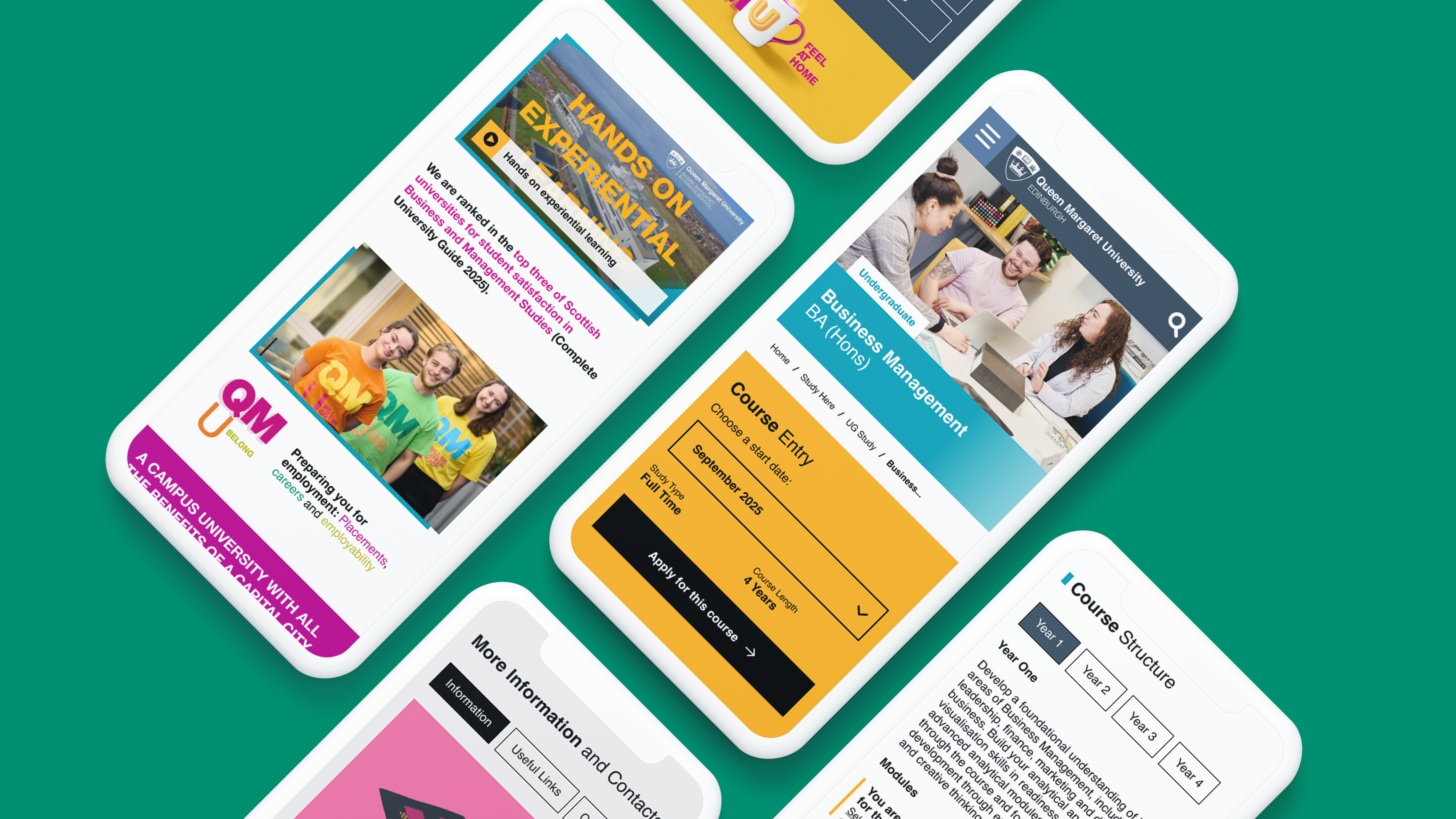
We worked closely with QMU’s marketing and digital teams to deliver a focused UX and design project. Rather than a disruptive full-site overhaul, we adopted an iterative approach centred on the course pages - the red-route journeys most critical to student decision-making. The project was shaped by insights from QMU’s 2023 UX review, benchmarking against competitors, and student journey analysis. Our team designed with accessibility (WCAG 2.2), SEO best practice, and mobile-first principles front of mind. All outputs were delivered in Figma with detailed documentation to ensure seamless handover for later build phases.
Impact
Course pages designed to perform, not just inform
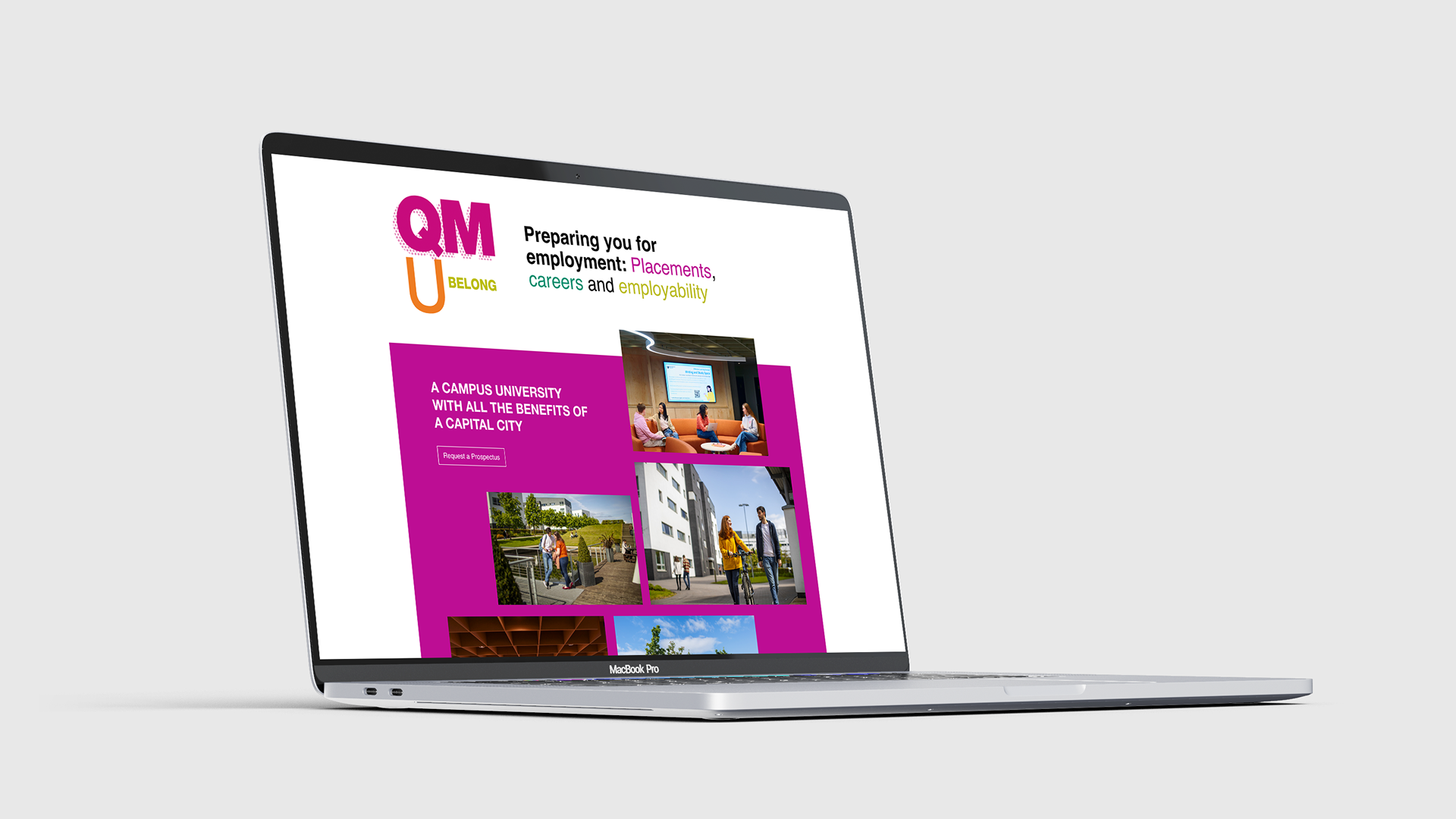
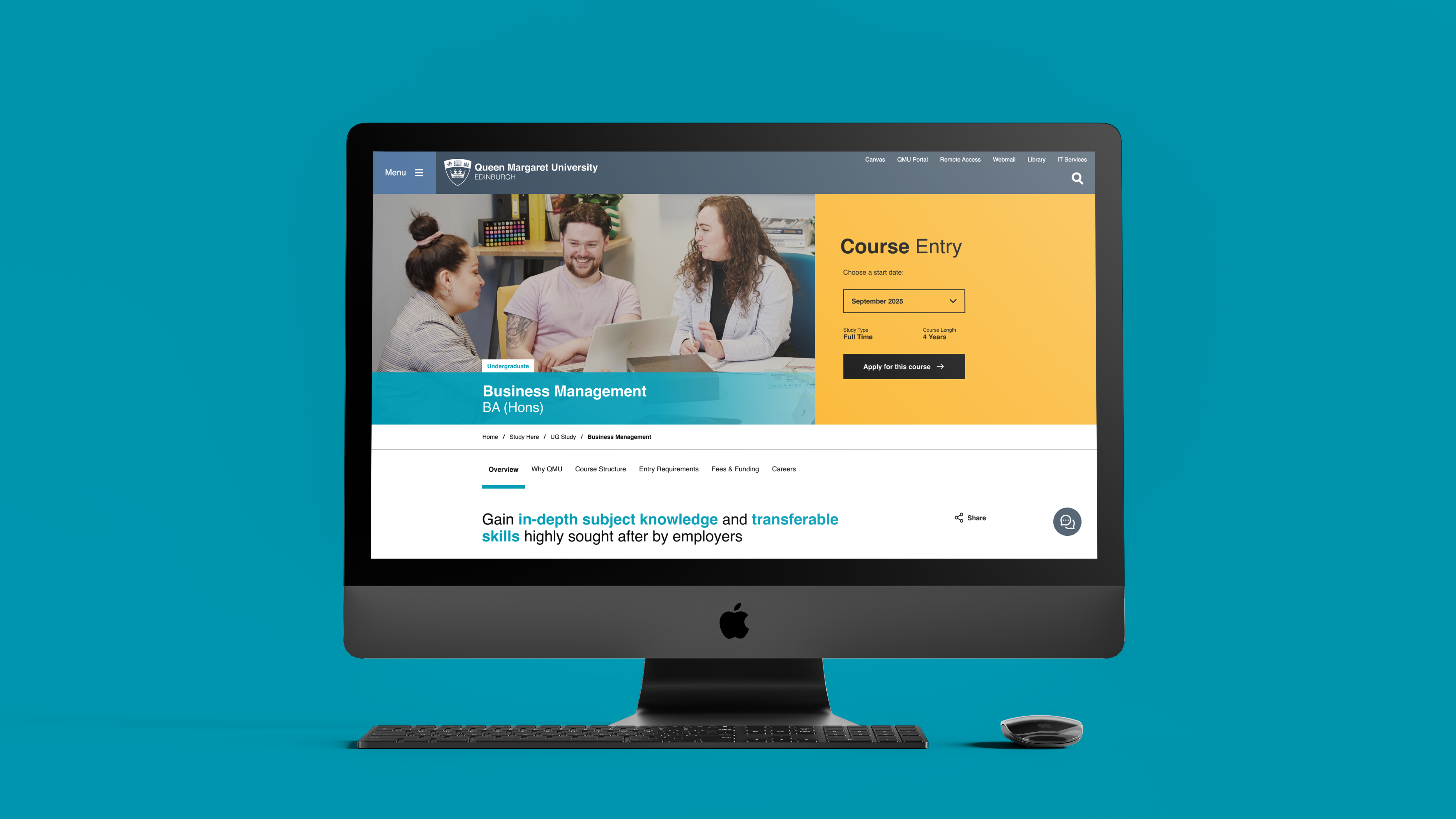
The new UX and designs provided QMU with a modern, flexible, and future-proof framework for undergraduate and postgraduate course pages. The improved layouts reduced clutter, introduced sticky navigation, and created clearer content hierarchies. Prominent, consistent calls to action were embedded across designs, including Apply, Enquire, and Visit Us, boosting visibility for conversion points. Most importantly, the course pages were redesigned around student needs - making information easier to find, digest, and act upon.
Process
Process for growth
Discovery
We reviewed existing undergraduate and postgraduate templates alongside documentation from QMU’s UX review and consultancy studies. Workshops with QMU stakeholders helped us map student journeys, identify pain points, and prioritise content needs. This phase highlighted SEO challenges, accessibility gaps, and the lack of effective CTAs.
Design
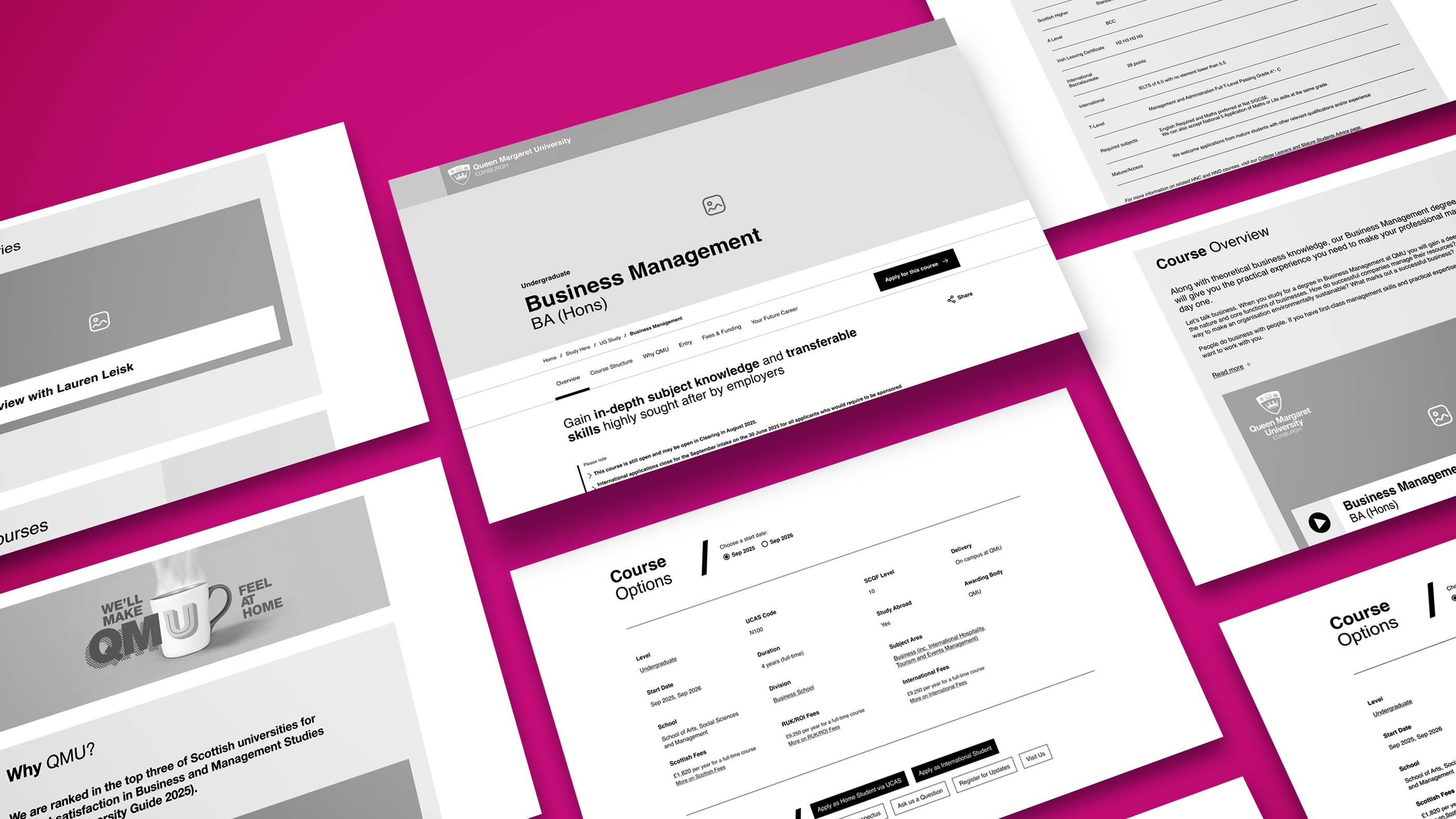
We created wireframes for desktop, tablet, and mobile, ensuring mobile-first principles shaped the design. These wireframes were iterated through stakeholder feedback and usability considerations. High-fidelity visuals were then produced in Figma, built around modular components to enable scalability. The new designs balanced white space with content density, introduced stronger visual hierarchies, and reflected QMU’s evolving brand guidelines.
Evolution
Although no build work was in scope, the handover included detailed design documentation and recommendations to support smooth development. The modular, component-led design direction sets QMU up for future enhancements, enabling consistent application across new and existing course pages.
The Outcome
Sharper design, stronger engagement, and a clear path to conversion
The redesigned course pages give QMU a refreshed digital presence that better reflects its brand, engages prospective students, and strengthens recruitment journeys. By focusing on UX and design, QMU now has course page templates that are accessible, SEO-optimised, and geared towards lead generation. With clear documentation in place, the University has a strong foundation for implementing the designs and evolving them over time.